La Grazia Offers a Surprising Portrait of Italian Politics
Dir: Paolo Sorrentino
Cast: Tony Servillo
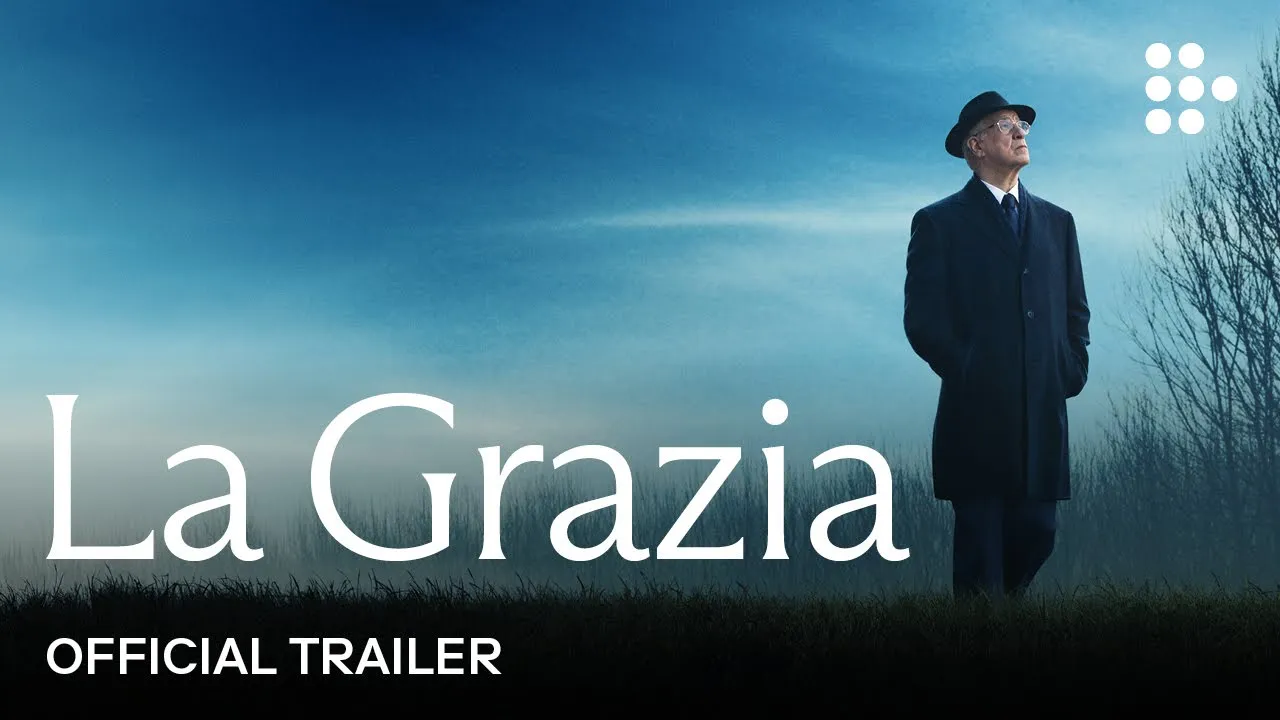
Paolo Sorrentino’s new drama presents a refreshingly atypical portrait of an Italian president, for whom power is more of an enervation than an aphrodisiac. President Mariano De Santis faces the twilight of his time in public office, with two landmark decisions to make: whether to sign into law an act that will legalise euthanasia, and choosing to pardon two individuals convicted of murder. The decisions are hardly helped by De Santis’ rigid Catholicism and apparent preference for rumination over decisive action. There is also the spectre of his long-dead wife, whose apparent infidelity both haunts and taunts him. In lesser hands, so many weighted issues might sink a film. But Paolo Sorrentino tackles them with an understatement that results in arguably his best film in a decade. It’s also a commentary on how politics has shifted in our world. Italian cinema was once a hotbed of political provocation and discussion. For almost 40 years, from the late stages of World War II up until the mid-1970s, the country’s best filmmakers shone a light on their society: its mores and hypocrisies, governance and instability, revolutionary fervour and profiteering elites. The political establishment eventually neutered filmmakers’ power by controlling the modes of production. A less radicalised, more controllable, and socially and culturally conservative cinematic landscape emerged – one that mirrored the country’s own changing politics. Then, in the 2000s, a new generation emerged, led by Sorrentino, who seemed intent on reviving this kind of cinema. La Grazia is the director’s third film to grapple directly with the vicissitudes of Italian political life, but the first whose protagonist is entirely fictional. His 2008 political drama, Il Divo, was a darkly witty and stylish biographical portrait of Giulio Andreotti, intermittently the Italian Prime Minister across six governments between 1972 and 1992. Il Divo captures Andreotti during his final election in 1992, as he reflects on his tumultuous career, a failed bid for the presidency, and the various scandals that rocked his standing and tarnished his reputation. The film is surprisingly frank in dealing with the statesman’s links to organised crime, and is unwilling to shy away from the uglier side of Andreotti’s time in power. Blistering satire also underpins Loro (2018), Sorrentino’s sprawling, two-part portrait of Silvio Berlusconi that, once again, stars Servillo. No other Italian statesman has succeeded in emboldening his international reputation as the three-time Prime Minister, media magnate and self-styled playboy who enjoyed the nickname Il Cavaliere (‘the knight’) from those who adored him. An early example of a modern populist leader, Berlusconi courted outrage with his views, opportunism and lifestyle. Loro draws together an assembly of real-life and fictional characters, from Berlusconi’s personal and political circles, as it sculpts a portrait of a time when his power was waning, his marriage was failing and the glitzy lifestyle he projected was a smokescreen for unbridled greed. If the first part rattles along at a fair pace, the second – by the sheer expansiveness of Berlusconi’s interests, activities and ambitions – can only cover in broad strokes what Il Divo accomplished in detail. Nevertheless, it remains more direct than the hazy focus and tonal unevenness of the filmmaker’s first attempt at an English-language drama, 2011’s This Must Be the Place, which saw Sean Penn’s faded, Robert Smith-lookalike rock star decide to hunt down a Nazi war criminal. Loro is certainly more successful than that curio, but there are moments when Berlusconi slips through Sorrentino’s fingers. Politics, albeit of a more tangential kind, has been a constant in other Sorrentino films. The embittered antagonist of The Family Friend (2006), in which an avaricious property owner receives his comeuppance at the hands of his tenants, can be see